


In this blog
Look beneath your feet
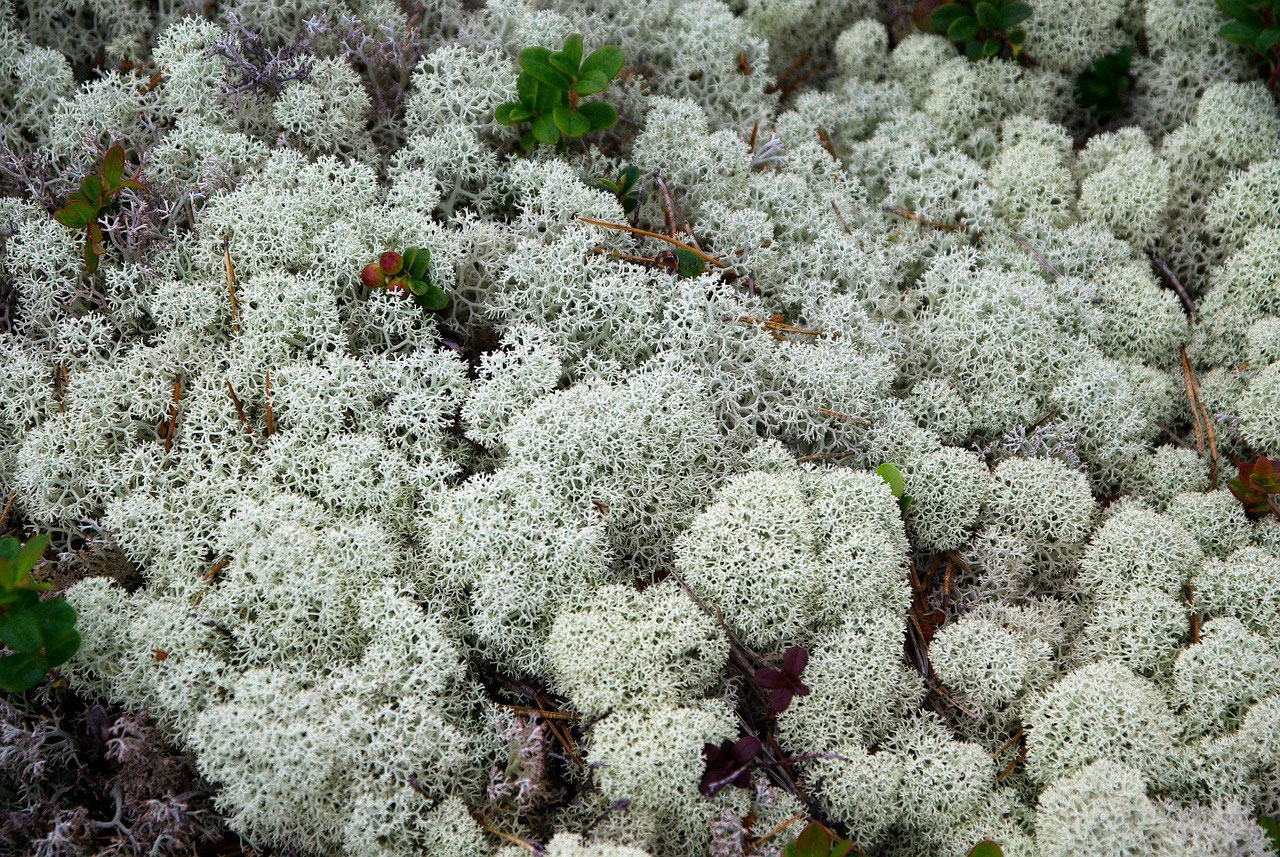
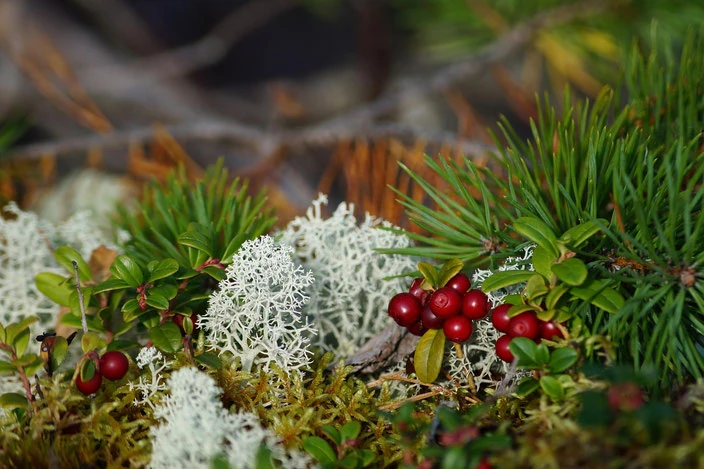
The pale ground in a dry pine forest and the soft surface of a wet bog are different living habitats. Reindeer lichens form branching, light-coloured cushions; mosses form leafy carpets. Their modest appearance hides an important role in the northern landscape.
Lichen is not moss
A lichen is a partnership involving a fungus and a photosynthetic partner, usually an alga or cyanobacterium. Mosses are small plants. Reindeer lichens such as Cladonia rangiferina, Cladonia arbuscula and Cladonia stellaris thrive in suitable open, nutrient-poor habitats. They take up moisture from their surroundings and can become brittle in dry weather.
Peat mosses, or Sphagnum, are associated with wet ground. Their ability to retain water helps shape bog habitats. A mossy hollow and a dry lichen heath should therefore not be treated as interchangeable ground cover.
Slow growth and lasting footprints
Lichens grow slowly, often by only a few millimetres a year, with substantial differences between species and conditions. A damaged mat may take many years to recover. Repeated trampling, vehicle tracks and heavy disturbance can leave an impression far longer than the visit that caused it.
Use established paths where possible. Avoid walking over pale, dry lichen cushions simply for a photograph. Wet bog vegetation is also sensitive, and the ground beneath it may be unstable.
Winter food for reindeer
Ground lichens are important winter forage for reindeer. Animals dig through snow to reach them. Deep snow, hard crusts or ice formed after thawing and refreezing can make food difficult to access even when vegetation remains underneath.
Herders may provide supplementary feed when necessary. The choice of feed and feeding arrangements require experience; visitors should never feed reindeer without the keeper's permission. Finding lichen in a forest is not an invitation to collect it for animals.
Forestry, grazing and changing winters
Lichen pastures are affected by several pressures at once: forestry, grazing, roads, trampling and changing snow conditions. Different stands provide different resources. Recovery after disturbance is slow, so the condition of a pasture cannot be judged from a single green summer photograph.
Tree lichens can also provide food, particularly where ground forage is hard to reach. Retaining a varied forest landscape matters to more than one species or season.
Bogs, water and carbon
In waterlogged peatlands, partially decomposed plant material accumulates as peat over long periods. These habitats store carbon and influence water movement. Drainage changes those conditions. Restoration can help recover peatland functions, but it does not instantly replace centuries of peat formation.
Mosses and lichens also offer shelter for small organisms. Certain species are useful indicators of environmental conditions, including air quality, though identifying a species and interpreting its presence require care.
May I collect moss or lichen?
No: Finland's everyman's rights do not include taking moss or lichen. Landowner permission is needed, and protected areas may impose additional restrictions. Leave decorative cushions, tree lichens and peat moss where they grow.
Seeing more on a forest walk
Near Ranua, compare a dry pine ridge with a wetter hollow from the path. Notice colour, texture and how the vegetation changes with moisture and shade. A close photograph can reveal the branching structure without removing anything.
Explore Lapland's forests and nature experiences around Mökki Tikka.
The cabinExperiences & regionJournal