


In this blog
A fire requires permission and safe conditions
A campfire is a familiar part of Finnish outdoor life, but lighting one is not included in everyman's rights. Use an authorised, maintained fireplace and check the current rules for that location. A ring of stones or old ashes does not prove that fire-making is permitted.
Find a place and check it
Maps such as Tulikartta and Huts.fi can help identify fireplaces and shelters. Treat independent map entries as starting points, then confirm the site's current instructions through the land manager, municipality or Luontoon.
Facilities can be closed, damaged or subject to restrictions even when they appear on a map.
Wildfire warnings
Check the Finnish Meteorological Institute's current warnings before lighting a fire. During a wildfire warning, open fires are prohibited, including at most designated fireplaces. A short rain shower does not cancel the official warning.
Disposable barbecues and wood-burning stoves that can spread heat or sparks are not a safe workaround. Some enclosed fireplaces with suitable chimneys may have different rules, but local bans can still apply. If uncertain, do not light the fire.
Outside designated places
Landowner permission is generally required and protected areas have additional rules. Permission never makes an unsafe fire acceptable. Follow the current official guidance rather than assuming that an empty forest means unrestricted access.
What is a laavu?
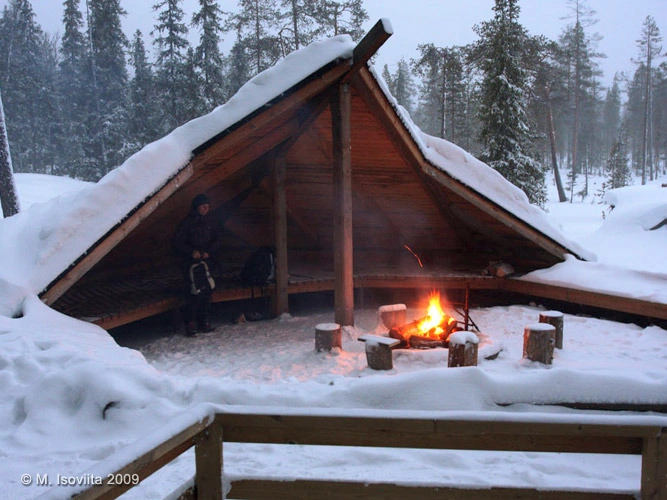
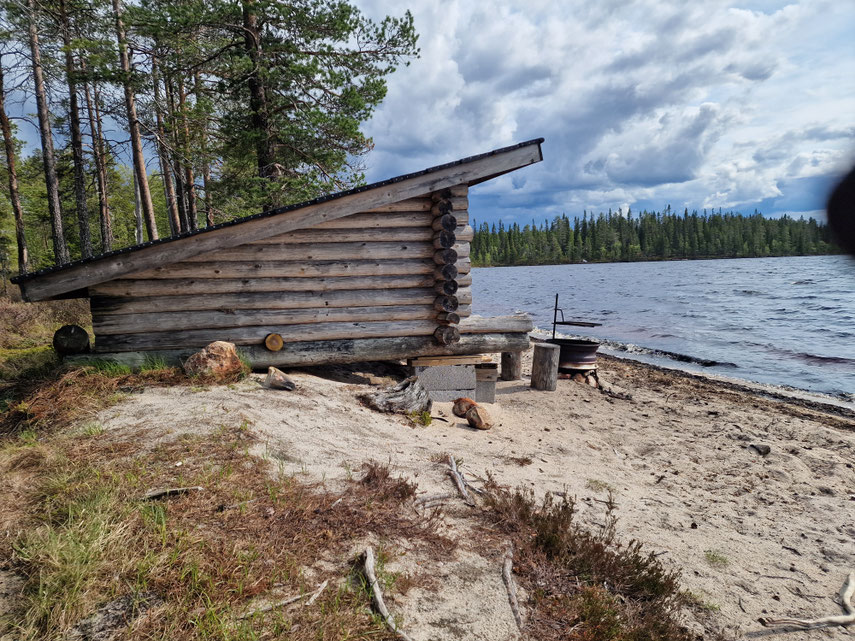
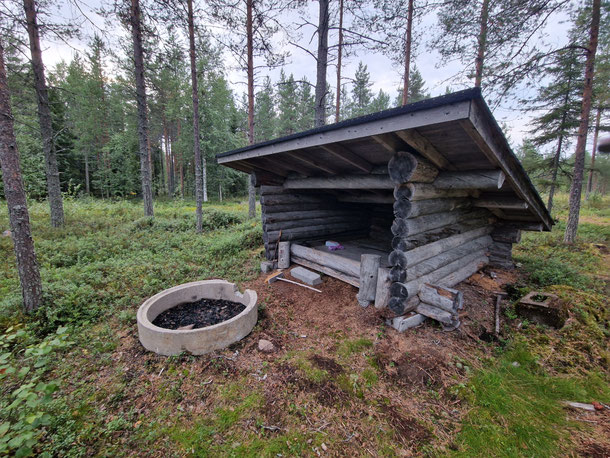
A laavu is usually a wooden lean-to, open on one side, with a sheltered sitting or resting platform. A fireplace often stands nearby. There may be a wood store or dry toilet, but equipment varies. Some permit overnight use and others are intended for day visits; check the individual site.
What is a kota?
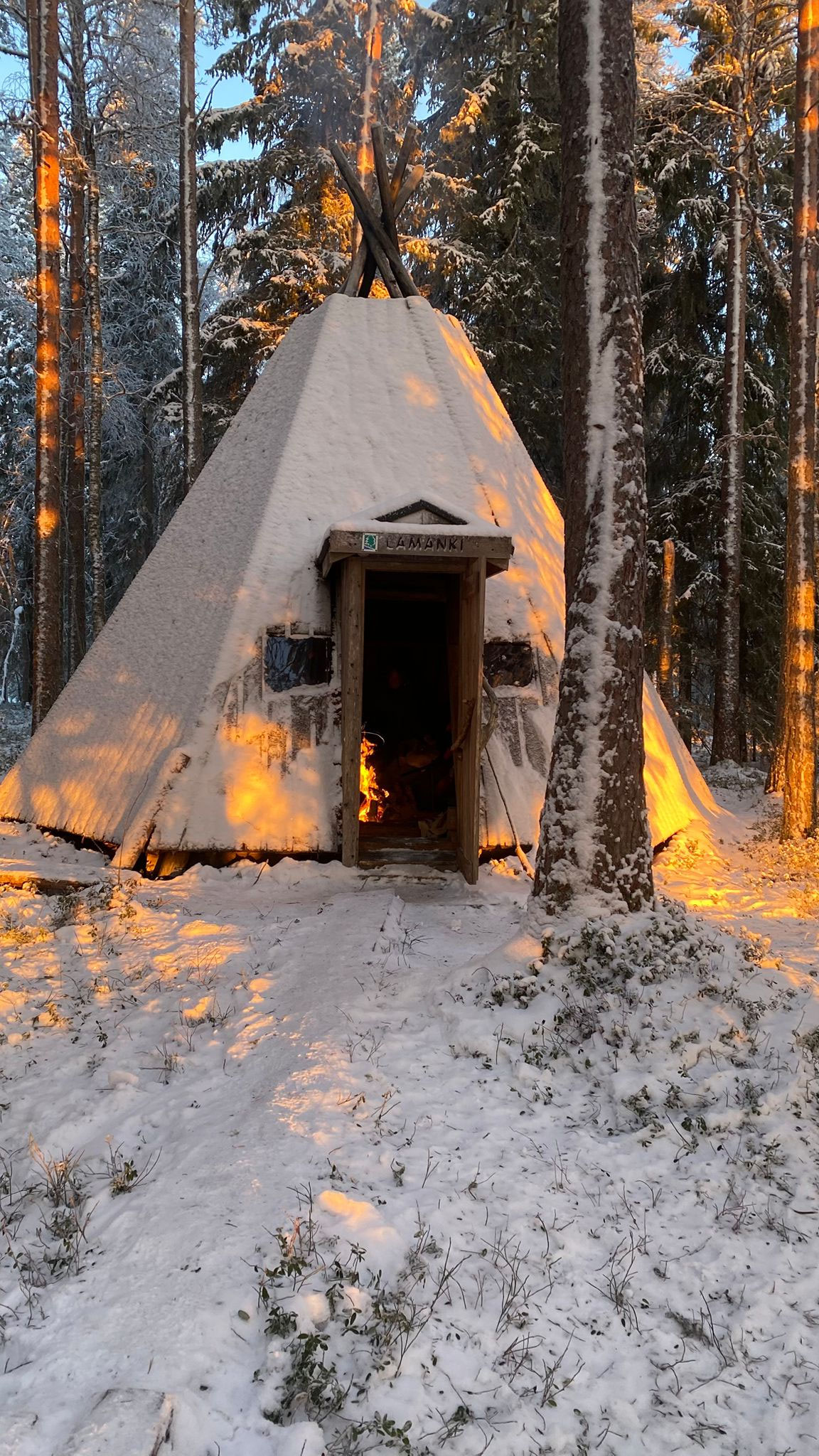
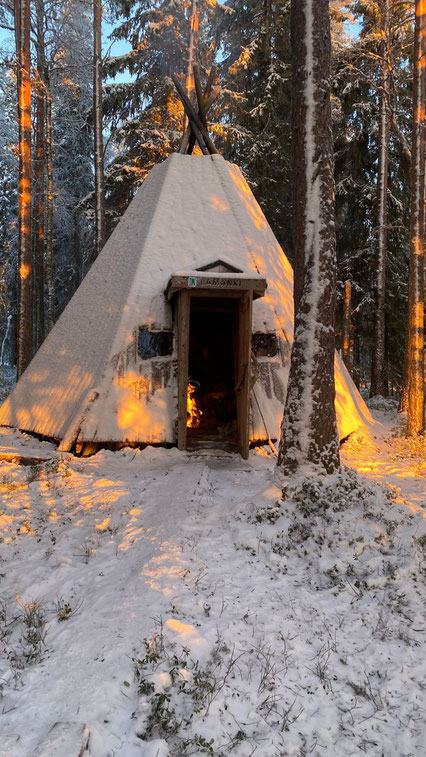
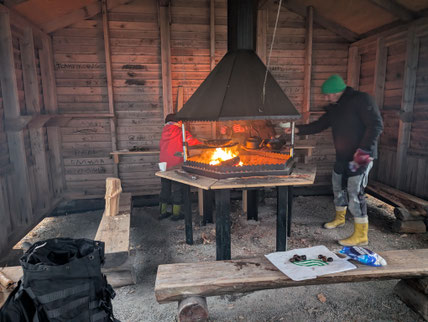
A kota is an enclosed or partly enclosed, often round or polygonal shelter, commonly with a central fireplace and smoke outlet. It offers more protection from wind than an open bench. It is a cooking or resting shelter, not a sauna. Overnight use must be specifically permitted.
Other cooking places
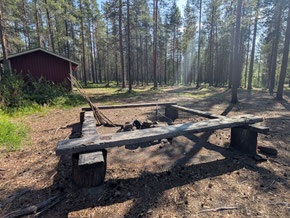
A keittokatos is a covered cooking shelter, sometimes with tables, seating and a chimney. A simple open fireplace may provide only a fixed fire ring, grill and benches. A roof alone does not determine whether a fire is permitted during a warning.
Recognising a maintained site
Look for official mapping, signs, a properly installed fireplace and instructions. Benches, a wood store or toilet may support the identification, but none replaces explicit permission. Never assume that a burnt patch left by a previous visitor is legitimate.
Open wilderness huts
An autiotupa is a simple shared wilderness hut intended for self-reliant visitors under its stated rules. It may have a stove, table, sleeping platforms and a guest book. It cannot be reserved merely by arriving with a group, and space is not guaranteed.
Carry your own appropriate shelter when planning a route that depends on hut accommodation. Follow the hut's sharing rules and leave room for others, especially those arriving tired or in difficult weather.
Day huts
A päivätupa is for daytime rest, warming up and meals. Routine overnight stays are normally not its purpose. Follow the posted rules; a genuine emergency is different from planning to use it as free lodging.
Use firewood sparingly
Wood left for a public fireplace is shared. Transporting and processing it can involve considerable effort, sometimes by boat or snowmobile. Use only what you need at the intended site. Do not take it away, damage structures or strip living trees for bark or fuel.
Do not depend on wood, an axe or kindling being available. Plan a meal that can also be eaten without a fire.
Share the space
- Make room for other visitors.
- Keep the fire small and supervised.
- Split wood only at the intended place.
- Watch children carefully near heat and tools.
- Keep dogs controlled and follow leash requirements.
- Do not burn packaging, foil or other rubbish.
- Take everything you brought back with you.
Extinguish completely
Allow enough time before departure. Use water, stir carefully and keep cooling until the ashes and underlying material are cold. A fire covered with sand or snow can still retain heat; do not regard a hidden ember as extinguished. Never leave a fire for an absent future visitor to manage.
A stove as an alternative
A suitable camping stove may be useful when a fire is unavailable, provided the site's rules and conditions permit its use. Follow the manufacturer's instructions and never use it in an unsafe enclosed space. Spark-producing wood stoves are still open-fire risks.
What to pack for a break
- Drinking water and a simple meal.
- A warm drink or coffee-making equipment.
- Reusable dishes and cutlery.
- A seat pad and an extra warm layer.
- A headlamp in the darker seasons.
- A rubbish bag and toilet supplies if needed.
- Fire-lighting items only if a fire is permitted and you know how to use them.
Two local favourites
Hietajärvi
Our original guide recommends a public fireplace beside neighbouring Hietajärvi, with a sandy shore. It can suit a quiet summer stop, subject to current access and restrictions. Ask us for directions and the latest local information.
Southern Simojärvi harbour
Another suggested stop is the public fireplace near the small harbour at the southern end of Simojärvi. It offers a lakeside setting for a pause after an outing. Check the actual facilities and permitted use on the day.
Coffee by the fire
A simple pot of coffee, bread or a grilled sausage is enough for many outdoor breaks. The point is time together, not a large fire or elaborate meal.
Frequently asked questions
Are public fireplaces free? Many are, but some sites are private or bookable. Can I use the wood? If provided for that site, use it sparingly there. Can I sleep in a shelter? Only where the site's rules allow it. Can I light a fire during a warning? Do not make an open fire; check any exceptional enclosed-fireplace rule explicitly. Must I take rubbish away? Yes.
See campfire experiences and the packing guide when planning your day.
The cabinExperiences & regionJournal