

In this blog
A voice across a quiet lake
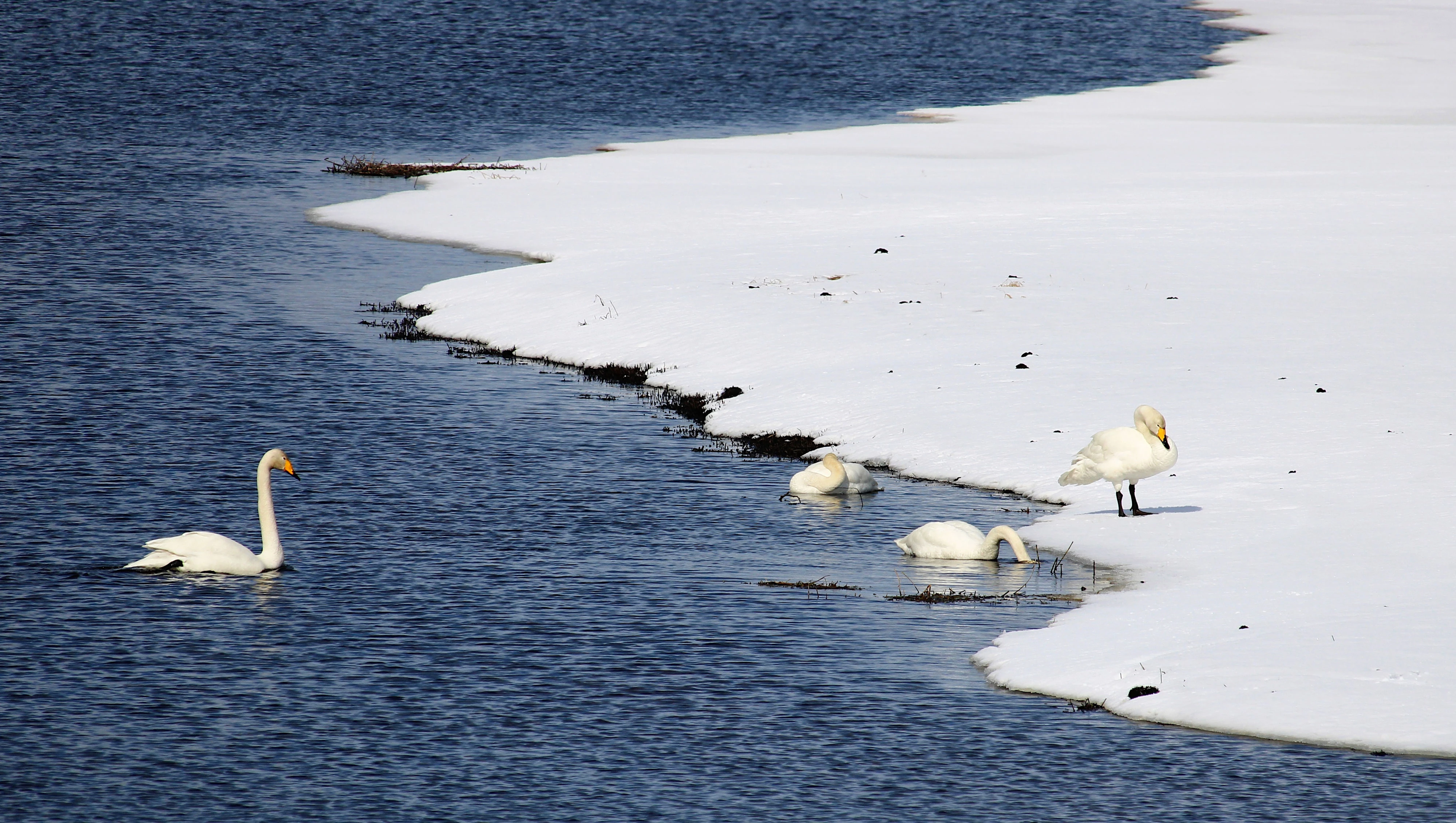
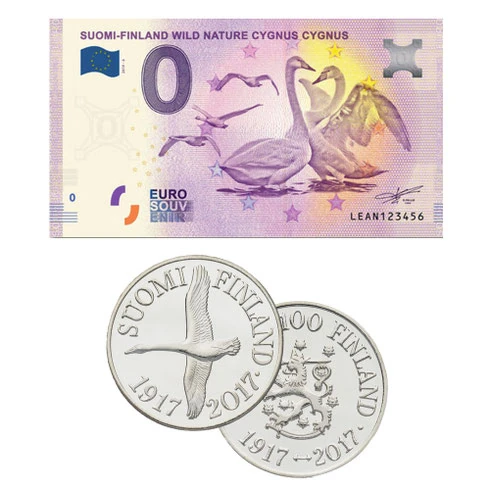
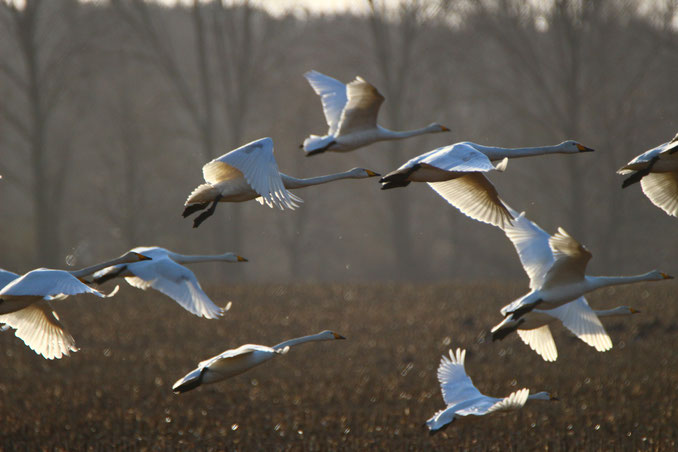
A clear trumpeting call over the water is one of the memorable sounds of spring in Lapland. The whooper swan, Cygnus cygnus, is Finland's national bird. In Finnish it is called laulujoutsen. It belongs to the landscape of lakes, wetlands and migrating birds as much as reindeer belong to the familiar image of the north.
A Finnish conservation symbol
The whooper swan has an important place in Finnish culture, including associations with the Kalevala and the music of Jean Sibelius. It also represents a conservation success: Finland's breeding population declined severely in the twentieth century and subsequently recovered with protection.
Population figures depend on the period and survey being cited. The important story is the recovery from a very small breeding population, not a promise that every lake now has a pair.
How to recognise one
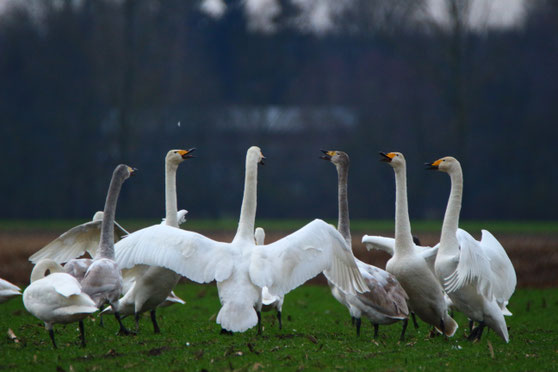
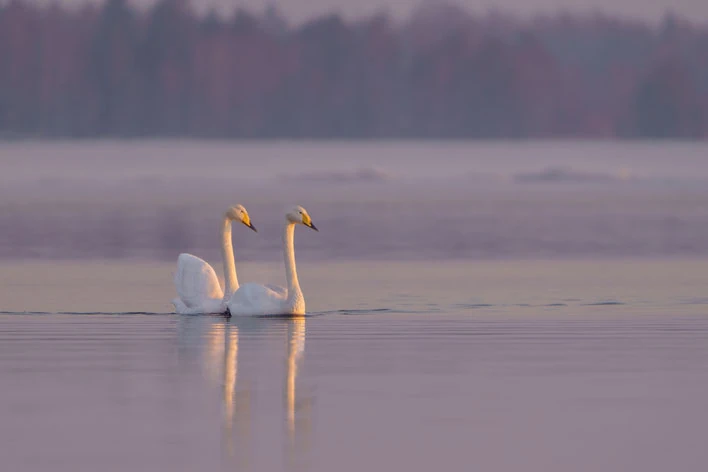
Adults are large white swans with black legs and a yellow-and-black bill. The broad yellow area extends forward from the bill base. A mute swan instead has an orange bill and a prominent black knob. Whooper swans are much larger than geese, although size alone is not sufficient for identification.
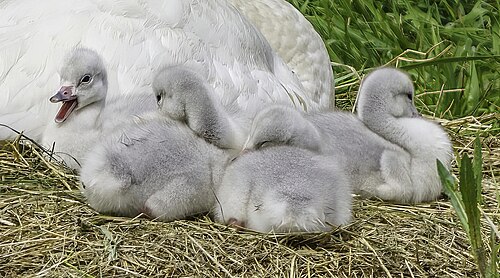
Young birds are greyish or brownish-grey rather than pure white. Family groups can therefore include white adults and noticeably darker young birds.
Where do they live?
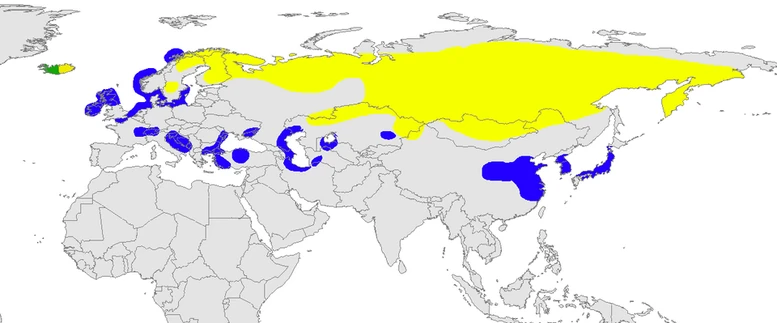
Whooper swans breed across northern parts of Europe and Asia. In Finland they occur widely where suitable wetlands and quiet water are available. Forest lakes, bog pools, sheltered bays and shallow feeding areas can all provide habitat.
Around Ranua and Impiö, watch suitable lakes in spring, summer and autumn. A quiet setting is helpful, but a sighting is never guaranteed. A white shape in a distant bay may be easier to notice after you have first heard the call.
Nesting and young
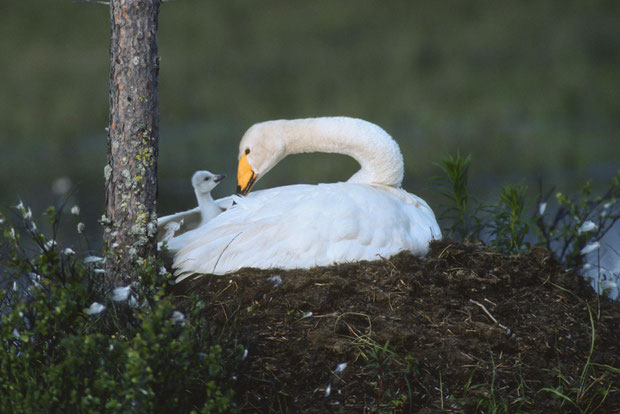
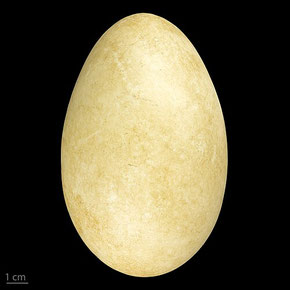
A pair usually raises one brood in a year. The nest is associated with a quiet wetland or shore, where the birds can be sensitive to disturbance. Clutches often contain around four or five eggs, with variation. Incubation takes several weeks.
The young can follow their parents onto the water soon after hatching, but need much longer before they can fly. This makes a sufficiently long ice-free season important in the north. An early return of winter can be difficult for late families.
Pairs often remain together across years. Young birds commonly stay with the adults through their first winter, learning routes and feeding places as part of the family group.
What do whooper swans eat?
They feed mainly on plant material, including aquatic plants, shoots and roots in shallow water. During migration and winter they may also forage in fields on crop remains. The combination of safe resting water and accessible food influences where groups gather.
Observe natural feeding rather than attracting birds with food. Approaching a family can interrupt feeding and draw the adults away from their young.
Migration follows the seasons
Northern breeding birds generally move south as waters freeze. Finnish swans winter in parts of southern Scandinavia and farther southwest in Europe, including Denmark, Germany and the Netherlands. Some birds remain farther north where open water and food allow it.
In spring, whooper swans can return early as open water becomes available. In autumn they may linger until freeze-up. Their calls can therefore mark both the beginning and the end of the open-water season.
The trumpeting call
The English name fits their loud, far-carrying voice. Listen for repeated, resonant calls in flight or between family members. The sound carries particularly well across a still lake.
Bird recordings can help you learn the call before a visit. Listen privately; playing calls towards wild birds can disturb them and is not needed to enjoy the encounter.
Watching swans around Mökki Tikka
In spring, scan open water from a safe shore. In summer, be especially careful around nests and families. Autumn can bring groups resting before moving south. Binoculars let you watch without closing the distance.
- Do not approach nests or make a sitting bird stand up.
- Keep away from families and their route to the water.
- Avoid drones near birds.
- If a bird changes its behaviour because of you, move back quietly.
The whooper swan is protected in Finland. A calm, distant observation is a better experience than a close photograph obtained through disturbance.
Explore birdwatching around Ranua and more stories about Lapland's wildlife.
The cabinExperiences & regionJournal