


In this blog
Ice patterns on a soap bubble
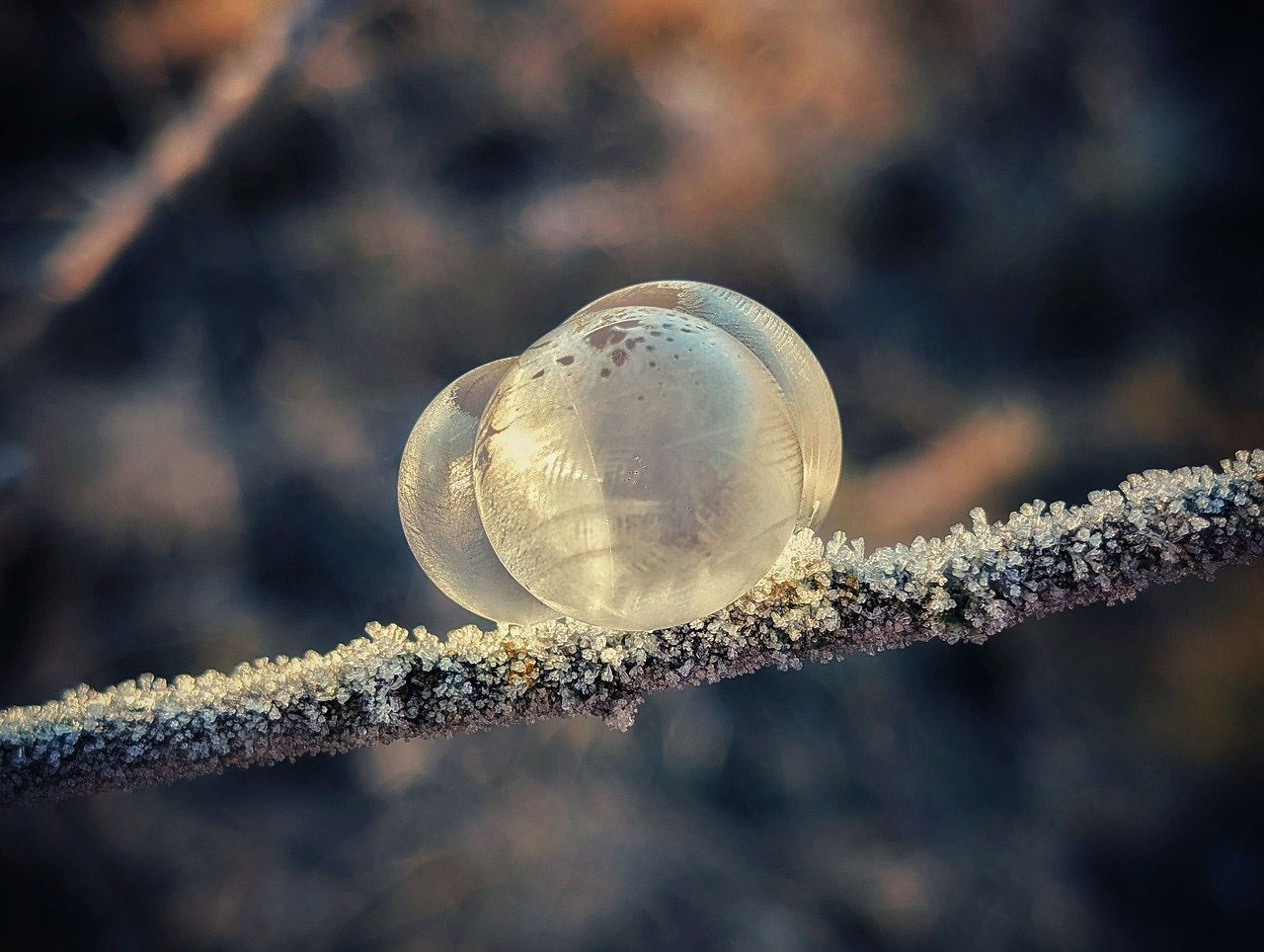
A soap bubble is a thin film of water stabilised by soap. In sufficiently cold conditions, ice crystals can form and spread through that film. Heat released during freezing and movement within the film help create the changing patterns.
Conditions
Very cold, calm weather and a cold surface give better chances. The original guide suggests around −15 to −25 °C as useful conditions, but success is not guaranteed at a particular temperature. Wind, the mixture and how the bubble lands all matter.
Mixture examples
The source offers two starting recipes:
- About 3.8 litres water, two-thirds of a cup of washing-up liquid and one tablespoon glycerine.
- Three to four cups water, one cup washing-up liquid and one-third cup glycerine or half a cup of corn syrup.
Use a small amount for the experiment and keep the mixture away from children who might drink it, pets and natural water. Follow the product instructions and clean up afterwards.
Trying a bubble
- Prepare the mixture and allow it to cool without freezing solid.
- Choose a sheltered spot with a cold surface you can reach safely.
- Form a bubble gently with a suitable wand or straw, avoiding contact between your mouth and the liquid.
- Watch for crystals without touching the delicate film.
- Use close focus and gentle side or backlighting for photographs.
Several attempts may be needed. Wear warm gloves and keep the session short enough to remain comfortable.
Why does boiling water appear to make snow?
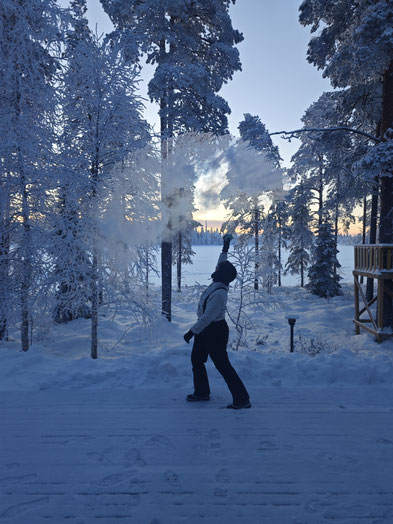
Videos sometimes show hot water thrown into extremely cold air. The water disperses into small droplets, with evaporation and condensation contributing to the visible cloud. It is not simply a demonstration that hot water always freezes faster than cold water.
Do not treat that trick as safe
Boiling water can remain hot enough to cause severe burns, and wind can blow it back onto the person or bystanders. Gloves, a flask or a low temperature do not eliminate the risk. We do not recommend throwing boiling water as a guest activity; frozen bubbles provide a less hazardous subject.
Frequently asked questions
Why do bubbles burst? Wind, handling, the mixture and temperature all affect them. Is glycerine essential? It changes the film's stability, but different mixtures behave differently. Will every bubble freeze? No. Treat it as an experiment, not a scheduled show.
See winter preparation advice.
The cabinExperiences & regionJournal